If you’re tired of making weak candles, this post is for you. This isn’t just about dumping in more fragrance oil and hoping for the best. There are five really simple things that you can do to make your candles smell stronger.
From choosing the right fragrance oil and wax type to knowing exactly when to add fragrance and how long to let your candle cure, these small adjustments will completely change your results. You can use beautiful jars, high quality wax, and fancy fragrance oils… and still end up with a candle that has no scent throw. Or, you can follow the tips in this post to make candles that smell amazing every time.


Use the right wax type
Wax type is one of the most important factors when it comes to how strong your candle smells. Some waxes naturally produce a much better scent throw than others. The difference comes down to the structure of each wax. That affects how efficiently it forms a melt pool and releases fragrance into the air. I’ll save the full science breakdown for a future deep dive, but based on both research and my personal experience making hundreds of candles, here’s how the most common wax types rank from best scent throw to worst:
Best scent throw → Worst scent throw
- Paraffin wax / Paraffin wax blends (para-soy blends)
- Coconut wax / Coconut wax blends (coconut–soy or coconut–apricot blends)
- Soy wax
- Beeswax


To make a strong scented candle, my #1 recommendation is to use either paraffin wax or coconut wax. Coco-apricot is my favorite! These waxes are simply better at releasing fragrance when burned, even without pushing fragrance load to the maximum. I’ve done several side-by-side comparisons by making a coconut apricot candle and a soy candle with the same fragrance oil at the same fragrance load. The coco-apricot candle always smells so much stronger.
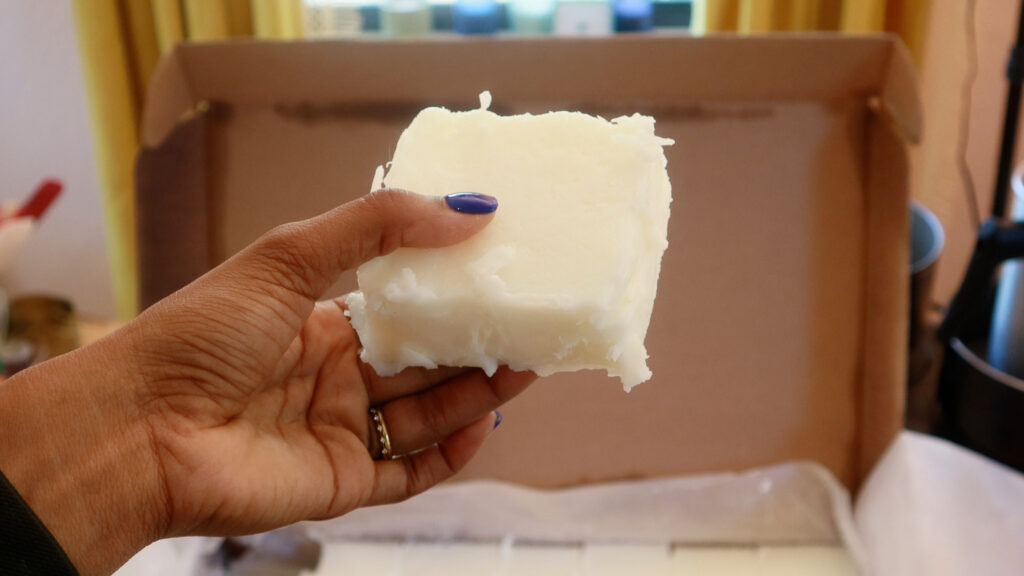
I know that soy wax is incredibly popular, but I’ll be honest: I generally don’t recommend soy wax if scent throw is your top priority. Even at the higher end of the recommended fragrance load, I consistently get weak smelling soy candles compared to paraffin or coconut-based waxes.
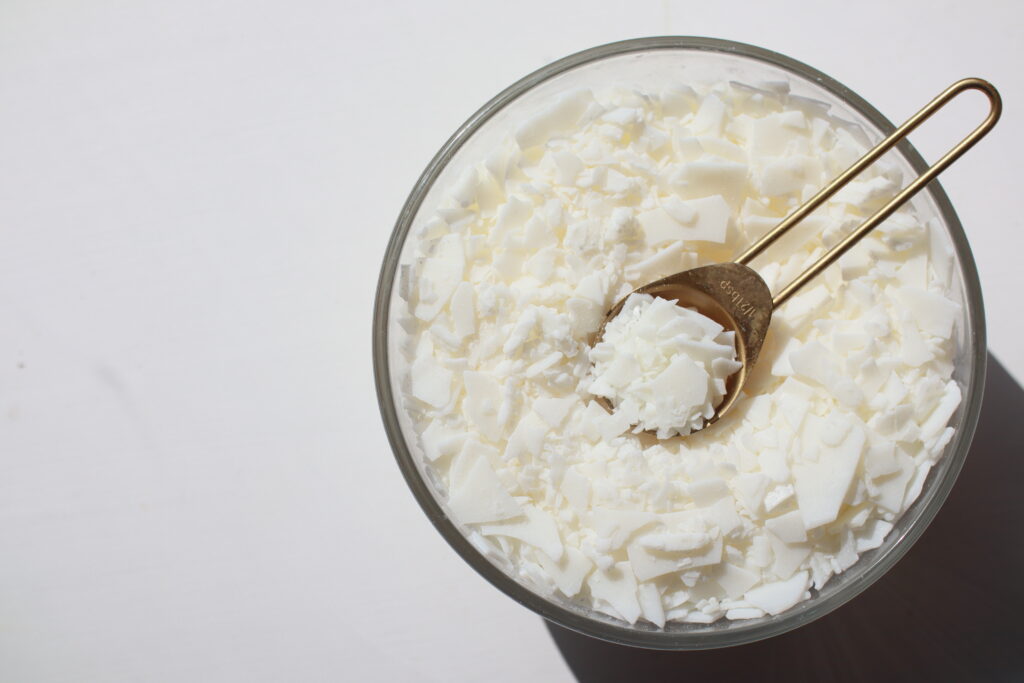
I would also avoid beeswax for scented candles. In my experience, it is even harder to get a good scent throw with beeswax than soy. It naturally has a subtle honey scent anyway so I use it for unscented tapers and pillars, but not scented container candles.
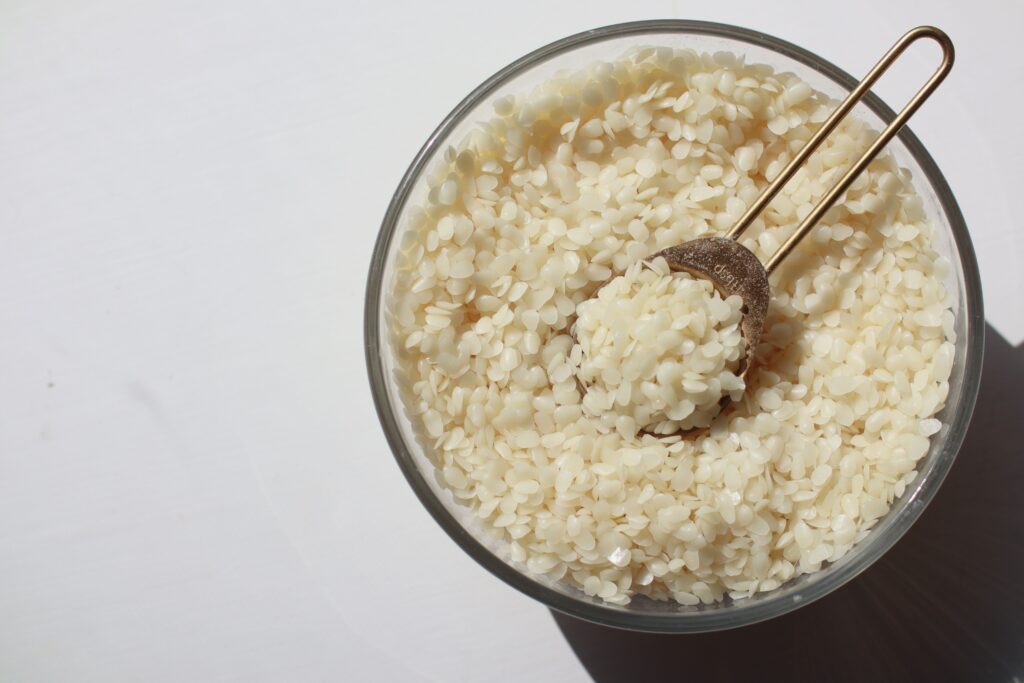
Choosing the right wax won’t fix every scent issue, but starting with a wax that’s known for good fragrance performance gives you a huge advantage from the start.
Pick the right type of fragrance oil
When I say “the right fragrance oil,” I mean two very specific things: (1) it needs to be formulated for candles, and (2) it shouldn’t be the cheapest option you can find.
Essential oils are not the same thing as fragrance oils.
Most essential oils are not a good choice for candle making. Just because an essential oil smells amazing in a diffuser does not mean it’s designed to be added to hot wax, cured, and burned. I’ve tested this myself and ended up with candles that were barely fragrant or worse, smelled like burnt chemicals once lit.
For the best results, use fragrance oils specifically formulated for candle making from a reputable supplier. These oils are designed to withstand heat, bind properly with wax, and produce consistent scent throw.
Don’t cheap out on fragrance oils.
I learned this the hard way. I used to buy super cheap fragrance oils from Amazon when I first started out because I was trying to save money. The result? Candles that smelled… not great. Weak, off, sometimes even unpleasant. Fragrance oil is not the ingredient to skimp on if you want your candles to smell good.
You don’t have to buy the most expensive option either, but I would suggest looking out for one thing. Look for IFRA-certified fragrance oils. IFRA (International Fragrance Association) certification means the fragrance has been tested and comes with usage guidelines for safety, including maximum recommended percentages for candles (see the next tip for more on this!). This helps ensure your candles are not only better smelling, but safer to burn. Most of the major candle suppliers sell IFRA-certified oils and will have this information featured prominently on their websites.
👉 If you’re not sure where to look for fragrance oils, I’ve put together a list of candle supply companies that I would recommend.
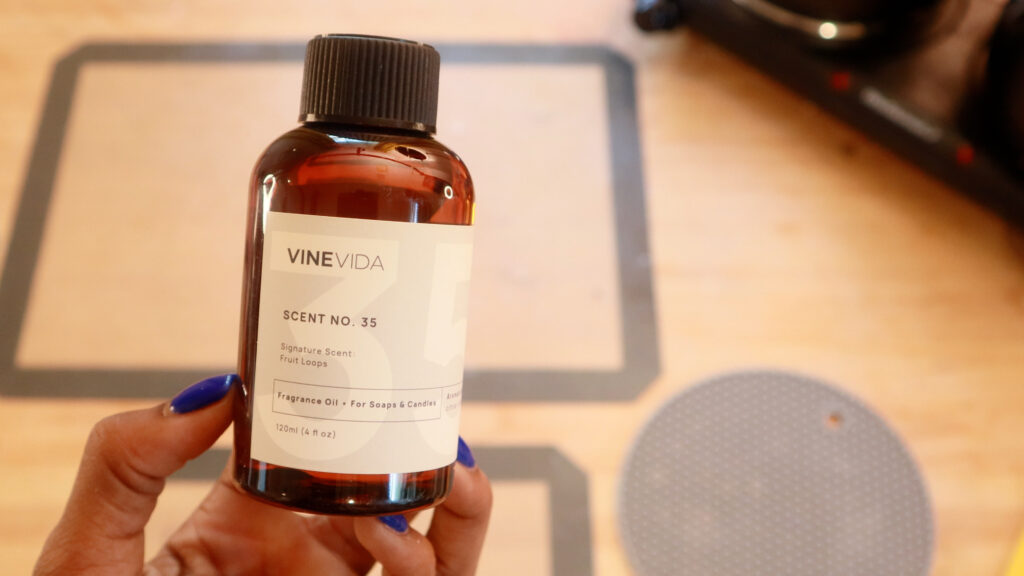
👉 I love Vine Vida fragrance oils because they make a lot of oils inspired by popular fragrances like the Acqua Di Gio Men’s Cologne or Volcano (my favorite Capri Blue candle of all time). They make a bunch of sampler packs that are (a) affordable and (b) a great way to try a variety of scents in small sizes before you commit to larger quantities. Also, their Fruit Loops scent is incredible!
👉 I also use a lot of scents from Candle Science. They have a ton of variety and they regularly have decent sales.
Pay attention to the fragrance load
Every candle maker should know what fragrance load is. It’s not a complicated concept. It simply tells you how much fragrance the product contains. It’s the weight of fragrance oil in the candle relative to the total weight of all ingredients in the candle (and it’s expressed as a percentage).
Here’s some quick math: if I use 1 ounce of fragrance oil and 9 ounces of wax, my fragrance load is 10%. That’s because 1 ounce of oil is 10% of the total product weight (10 ounces, wax + oil).
📌 If you need help calculating how much fragrance oil to use, bookmark my fragrance oil calculator. All you have to do is enter the total wax weight and the desired fragrance load. The calculator will tell you exactly how much fragrance oil to use.
!
Fragrance Load: the amount of fragrance oil added to a product, expressed as a percentage of the total product weight.
If a candle has a 10% fragrance load, that means 10% of the candle’s total weight is fragrance oil. The other 90% is wax and other ingredients.
The range for these fragrance oils is 3-10% so if you plan to use 9 ounces of candle wax, you can use anywhere from 0.28 oz. to 1 oz. of oil. The more you use, the stronger the candle BUT don’t go above the max fragrance load.

Most fragrance oils are designed to perform best within a range of about 5–10%. Your fragrance oil supplier should clearly list a recommended usage range on the product page or packaging. Always start there.
Using an amount on the higher end of the recommended range can help improve scent throw, but only up to a point. Adding more fragrance oil does not automatically make a candle smell stronger. Once the wax can no longer properly absorb the oil, the excess fragrance will separate and sit on the surface. This can actually be dangerous. Excess fragrance oil on top of a candle is flammable. Over-fragranced candles are potential fire hazards.
Stay within the manufacturer’s recommended fragrance load for the specific fragrance oil you’re using. Those guidelines exist for a reason, and following them will give you a good scent throw and a candle that’s safe to use.
Add fragrance oil at the right temperature
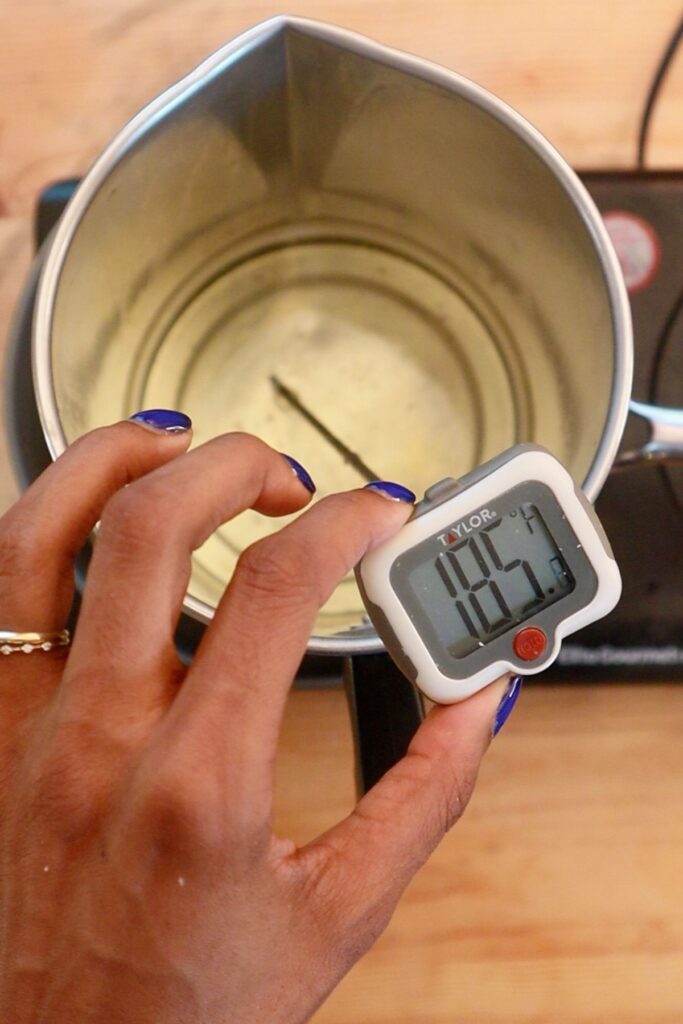
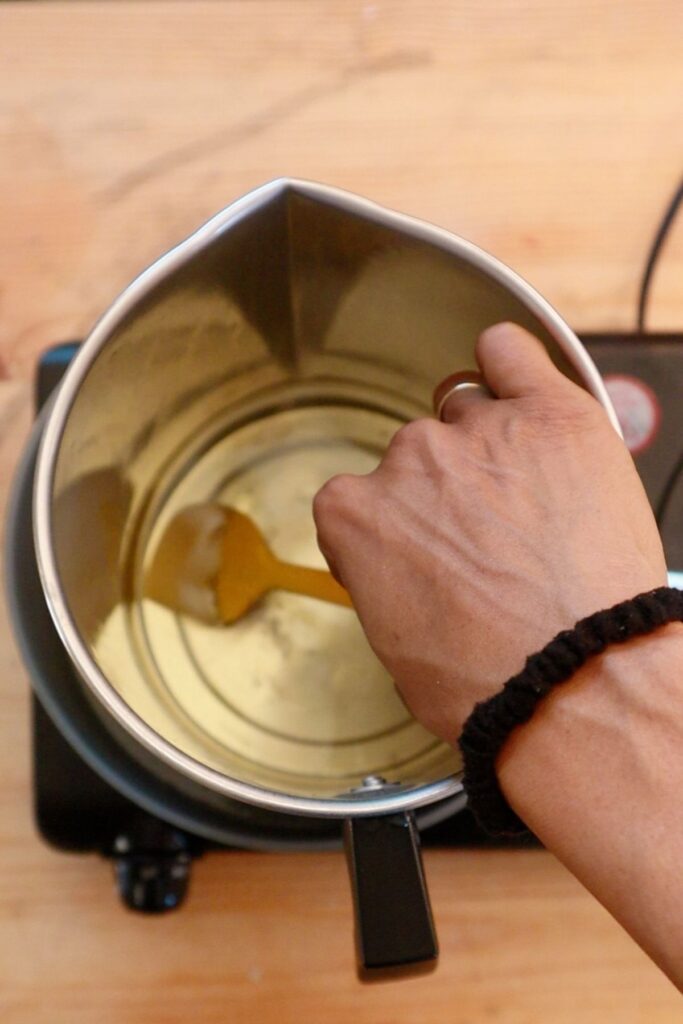
The best temperature to add fragrance oil depends on the type of wax you’re using, but a reliable target range is 180–185°F (82–85°C). This is the temperature range I use for paraffin, coconut, and soy wax. It consistently gives me the strongest scent throw. The wax is hot enough for the fragrance oil to fully bind and disperse evenly, but not so hot that it degrades the fragrance oil or the wax.
If you add fragrance oil to wax that’s too cool, it won’t fully bind.
I like to compare it to adding sugar to iced tea: it might dissolve a little, but you’ll get a much better result if you add sugar to hot tea and then let it cool. Fragrance oil works the same way in candle wax. When the wax is too cool, fragrance oil doesn’t properly absorb. The result is a weak candle.
Adding fragrance oil to wax that is too hot can also cause problems.
At extremely high temperatures, the oil can burn off or evaporate before it has a chance to bind with the wax. Overheating can also compromise scent performance and waste expensive fragrance oil.
Staying within the 180–185°F sweet spot helps ensure your fragrance oil fully binds to the wax and delivers the strongest possible scent when your candle is burned.
Wait for the candle to cure before burning
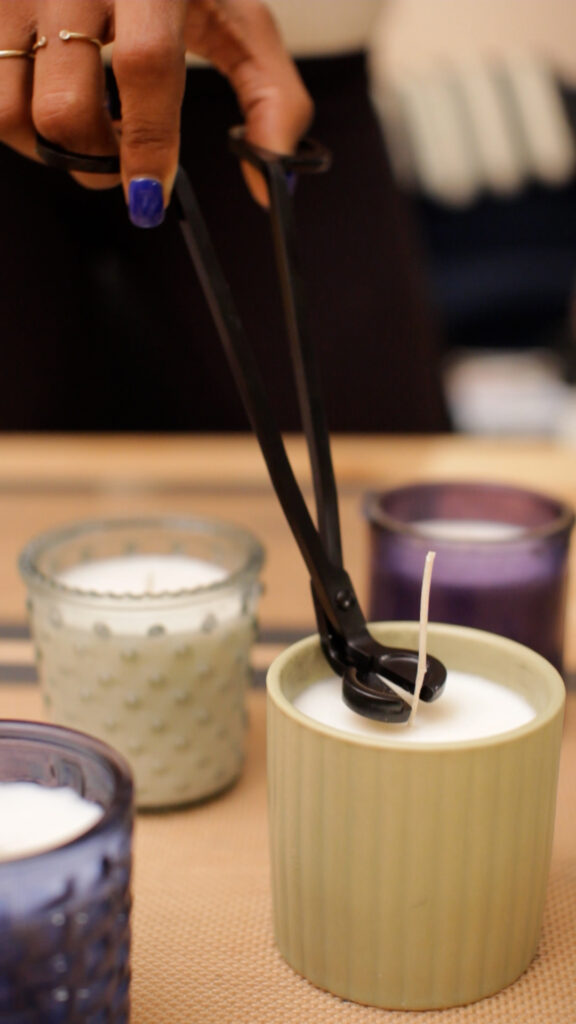
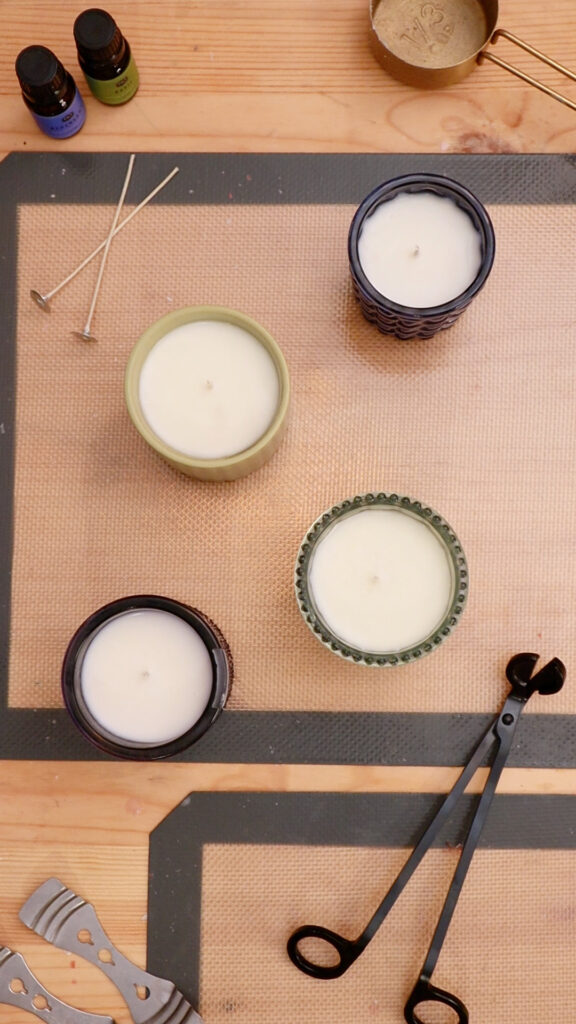
I know that it’s tempting to burn a candle the moment it’s finished, but you should wait for it to cure. Curing is just giving the candle a chance to fully solidify and stabilize. Unlike most parts of candle making, this step is incredibly easy. All you have to do is… nothing. Don’t move it. Don’t light it. Just let it be.
It’s like letting a dish rest after seasoning. The extra time allows the flavors to develop. In candles, that time allows the fragrance oil to fully bind with the wax. By waiting for the candle to cure, you’re setting yourself up for better scent throw and better burn performance.
Here’s a guide to how long you should wait based on wax type:
Recommended Candle Cure Times
| Wax Type | Recommended Cure Time |
| Paraffin Wax | 3-5 Days |
| Para-Soy Blends | 5-7 Days |
| Coconut Wax Blends | 5-10 Days |
| Apricot Wax Blends | 5-10 Days |
| Soy Wax | 10-14 Days |
| Beeswax | 10-14 Days |
So be patient, pick the right wax, and invest in good fragrance oil. You can use the maximum recommended fragrance load for a stronger scent, but don’t push it! Nobody wants to light a fire hazard. And be sure to add your fragrance in the 180–185°F (82–85°C) sweet spot for the best scent absorption.
Happy candle making! 🔥