If you’ve ever Googled “best candle wax” and immediately felt overwhelmed… you’re not alone. Candle making is one of those hobbies that looks simple from the outside: jar plus wax plus wick = candle, right? That’s until you realize that there are several different wax types and each one has its own quirks. The wax you choose could be the difference between a smooth, beautiful candle that burns evenly and an ugly candle with a nonexistent scent.
You do not need 10 different waxes. Start with one. Order 1-2 pounds of it. That’s enough to make a few small candles. If you don’t like it, you can easily switch to a different wax without having to offload a heavy ten pound slab of something that didn’t work for you. I’m going to recommend wax types that I think are (a) easy to learn on and (b) give consistent results. I’ll cover:
- How to choose the best wax for your candles
- Why blended waxes are the most beginner friendly
- The best candle wax for scented candles
- The best candle wax for molded candles
- And finally, why I don’t recommend starting with soy wax
If you don’t care about wax characteristics and you only want to know which type of wax to order, you can skip to my recommendations for scented candles here and for molded candles here. If you want some context as to why I recommend coconut wax for scented candles and pillar wax for molded candles, keep on reading!
The Best Wax Depends on the Candle You’re Making
Don’t let Google try to tell you that coconut wax is the best wax of all time for every candle. If you’re making a taper candle, that’s horrible advice. If you’re making a scented container candle, it’s a wonderful option. Start by asking yourself what type of candle you want to make. The answer will dictate the best wax type for you.
The most common candle wax types are soy, paraffin, beeswax, and coconut. There are other types like palm wax and gel wax, but I won’t cover all of them in this post because we’d be here all day. Waxes vary in hardness, melting point, fragrance throw, dye performance, and so many other characteristics. That’s why the type of candle matters: scented versus unscented, dyed versus natural color, contained in a jar versus released from a mold.
Here’s a quick guide to the four popular wax types:
Soy Wax (The Popular One)
A lot of beginners start with soy, but in my opinion, there are better options. It gets a decent scent throw, but does not bind as well with fragrance as paraffin or coconut wax. A common issue with soy wax is frosting which is basically when it looks like there is a powdery white film on the surface of the wax. Soy also tends to develop rough or uneven tops which isn’t a big deal functionally, but can be annoying if you want your candles to look nice (and who doesn’t?).
PROS:
- Affordable and widely available
- Tons of soy candle tutorials online
CONS:
- Prone to frosting
- Uneven/rough tops are common
- Scent throw can be weak


Paraffin Wax (Good Performance, Less Clean Branding)
Paraffin has a bad reputation, but I think it’s worth mentioning because it performs well. There is a reason that it is widely used by most major candle brands. It binds well with fragrance so it makes candles with a great scent throw. It also holds dye very well, making it a good choice for colorful candles too. A common issue with paraffin wax is that it develops sink holes (or dips in the surface of the candle) when its forced to cool down too quickly, but that can be prevented by monitoring temperature.
PROS:
- Excellent scent throw
- Dyes beautifully
- Affordable and widely available
- Reliable, consistent performance
CONS:
- More prone to sinkholes during cooling
- Perception as less “clean” or “natural” compared to plant based waxes

Coconut Wax (My Luxury Leaning Favorite)
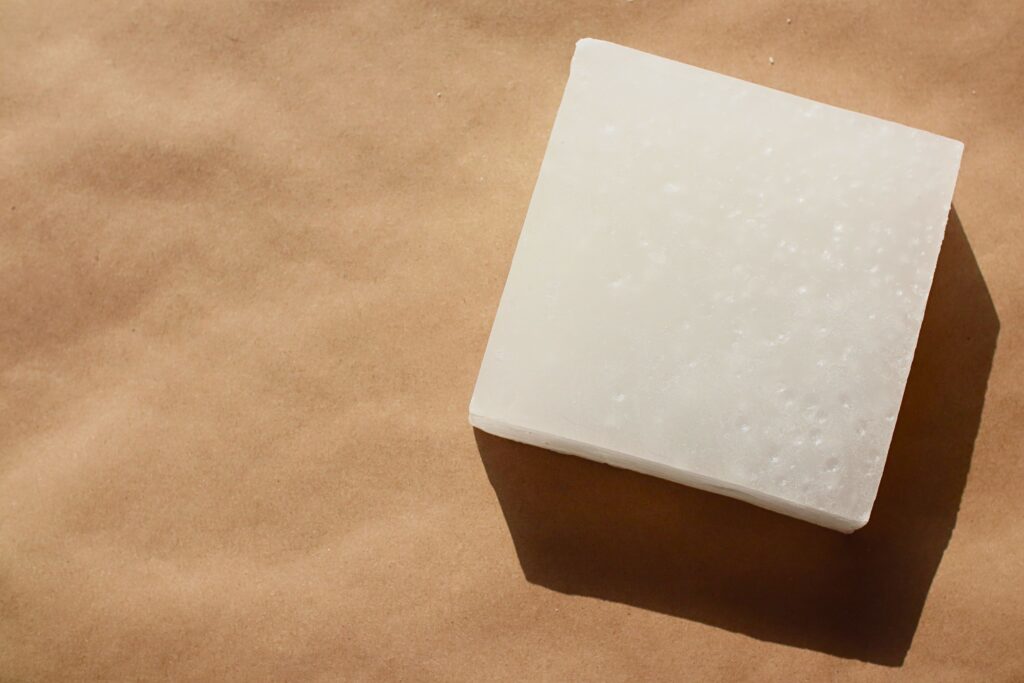
Coconut wax is not as widely available as soy, but it’s starting to become more popular. By itself, coconut wax is actually too soft to function as a candle so it’s always blended with another wax type. You can find coco-apricot, coco-soy, and coco-paraffin blends and they are all wonderful.
I never have issues with sinkholes or surface imperfections when I use coconut wax and I have never noticed any frosting. It binds well with fragrance so it’s easy to get a strong scent throw. The only drawback is that coconut wax has such a low melting point that it is hard to ship in hot weather. I live in Texas and I made the mistake of ordering an 11 pound slab last summer. Part of it melted before I could grab it off of the front porch. Just be aware of this if you live in or plan to ship to a hot climate.
PROS:
- Excellent scent throw
- Smooth, even burn
- Creamy appearance with minimal surface imperfections
- Beginner friendly
CONS:
- Difficult to ship in hot weather
- Less widely available (but starting to become more popular!)

Beeswax (A Natural Option)
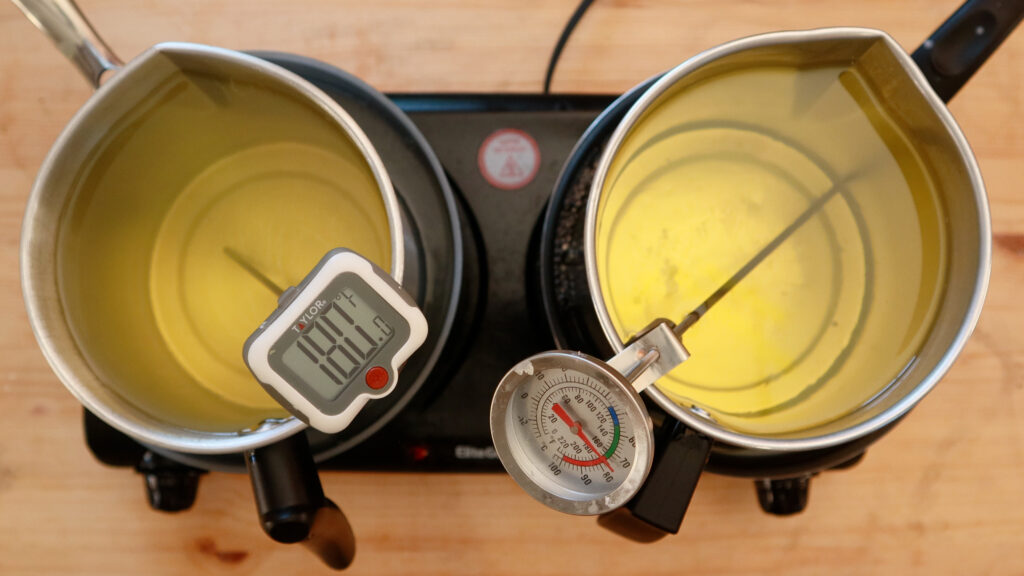
I love beeswax, but it’s not the right choice for most projects, and it’s not something I recommend starting out with as a beginner. It is the wax type that I have struggled with the most. It’s also on the more expensive side. You’ll probably have a much easier time learning candle making with a different wax first, but I strongly recommend coming back to beeswax after you do.
PROS:
- One of the cleanest, most natural wax options
- Naturally has a light honey scent
CONS:
- More expensive than most wax types
- Steeper learning curve


Blended Wax Types are Beginner Friendly
If you’re new to candle making, starting with a wax blend is usually your best bet. Blended waxes are designed to perform well for specific types of candles which makes them easier to work with than single ingredient waxes. Instead of trying to balance scent throw, burn quality, and appearance on your own, blends do that work for you.
CONTAINER WAX BLENDS
Container wax blends are great for candles that will live in jars, tins, or other containers. They’re designed to hold fragrance well, adhere cleanly to the edges of a container, cure with smooth tops, and burn evenly. If you want to make scented container candles and have no clue where to start, a container blend is one of the easiest and most reliable options.
Pillar WAX BLENDS
Pillar wax blends are for molded candles like pillars, tapers, and other decorative shapes that need to stand on their own. These blends mostly contain a harder wax (usually paraffin) for structure and clean mold release, but are also softened with a little bit of soy or coconut to improve burn quality and prevent issues like sinkholes and cracking.
other wax blends
There are so many variations, but some of the most popular include: paraffin + soy, coconut + soy, coconut + apricot, and coconut + paraffin. If the dominant wax is soft, it is probably better suited for containers. If the dominant wax is hard, it is better for molds. That’s a good rule of thumb to remember for candle making.
Best Wax for Scented Candles
If your goal is to make scented container candles, you’ll want to look for a wax that:
- holds fragrance well
- melts evenly
- gives you a smooth top most of the time
- adheres to glass reasonably well
Based on that wish list, here are the best wax options for scented container candles:


Best overall beginner wax: any coconut blend
Coconut wax blends are my top pick for beginners (and honestly, they’re still my favorite even though I’ve graduated from beginner status).
They bind so well with fragrance. You don’t have to max out the fragrance load to get a candle that smells amazing. Not only is it easy to get a strong scent throw, but it’s also easy to get a smooth top. With other wax types, pouring temperature has to be just right or I’ll run into sinkholes. With coconut blends, I almost never have those issues.
I wish coconut wax had been more popular when I started making candles several years ago because it consistently gives me candles that look, smell, and burn really well. Coco-apricot is my favorite, but coco-soy and coco-paraffin are also great beginner options.
The ONLY downside to coconut wax in my opinion is that it is has such a low melting point that it does not ship well in hot weather. If you plan to ship your candles (or order coconut wax), this is something to factor in.
best wax for colorful scented candles: any paraffin blend
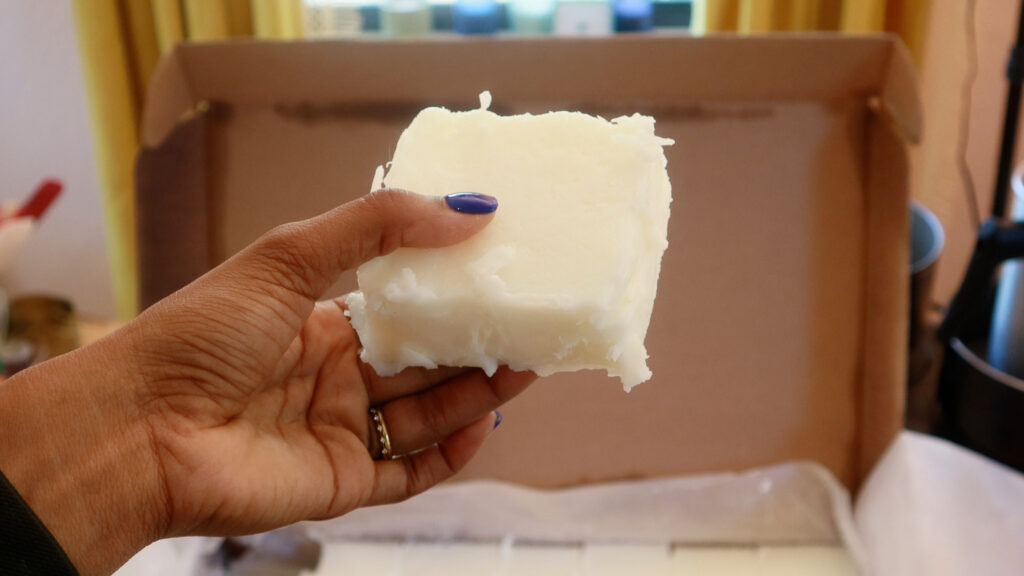
If you plan to dye your candles, paraffin is the way to go. It accepts dye way better than other wax types. Soy and coconut waxes can be dyed, but the results are softer and more muted. They’re fine for pastels or natural looking shades, but if you want anything bright, vibrant, or bold, you should go with paraffin.
If you want strong fragrance and strong color, a paraffin-coconut blend is a good way to get the best of both worlds.
honorable mention: container soy blend
I’m not a fan of starting with straight soy wax, but if you are committed to using it, go with a blend, not 100% soy. Look for descriptions like ‘container soy blend’ or ‘para-soy blend’. Blending soy with a little bit of paraffin will improve the scent throw, reduce frosting, and help with smoother tops.
Best Wax for Molded Candles
Molded candles (pillars, tapers, shapes, bubbles, flowers, etc.) have a completely different set of requirements. If you’re making molded candles, you’ll want a wax that’s:
- firm enough to hold its shape
- designed to release cleanly from molds
- able to burn without collapsing
Based on that wish list, here are the best wax options for molded candles:


best overall wax for molded candles: pillar wax
All 3 of the waxes in this section make great molded candles, but a pillar wax blend is the most beginner friendly option. It is specifically formulated to be poured into molds and released as a free-standing, stable candle. It’s usually a mix of paraffin and soy so it has the benefits of a hard wax that can hold its shape but is still easy to work with. Sometimes it includes other additives like stearic acid that make the wax harder and more durable so that it can withstand the de-molding process.
runner up: paraffin wax
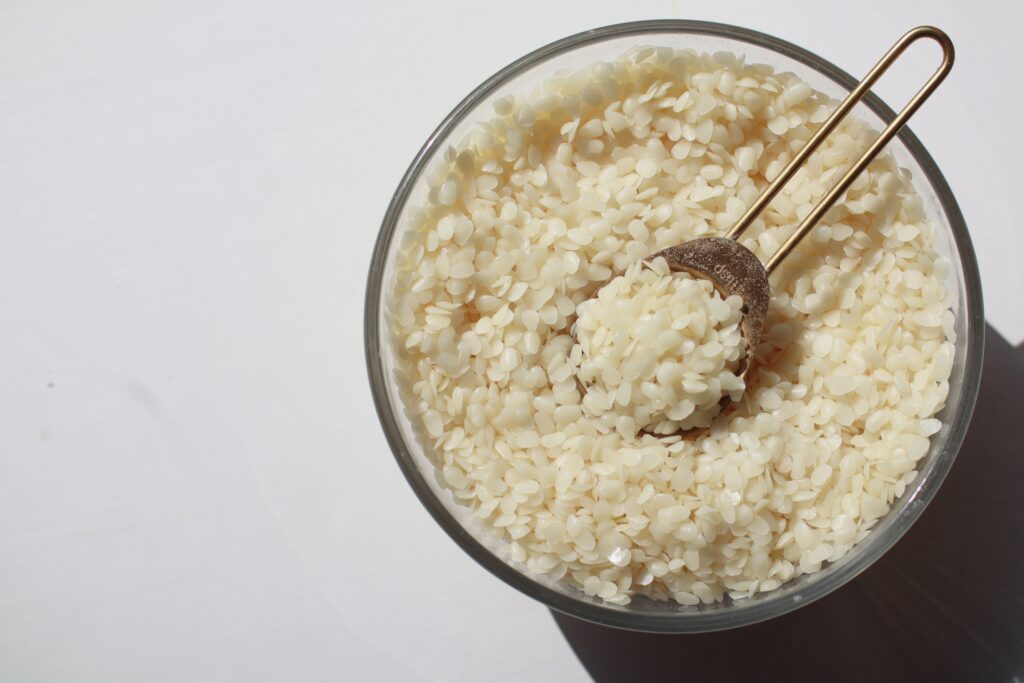
Paraffin shrinks slightly as it cools which helps it to pull away from the mold and release cleanly. If you go with paraffin, I recommend getting beads rather than a slab of wax. They are so much easier to measure and use. I don’t like using 100% paraffin because it is very prone to sinkholes, but I do think that blends are a good option. A paraffin blend is essentially the same thing as pillar wax so this recommendation is a bit redundant. Basically if you get one takeaway from this section, it’s to try a ‘pillar wax blend ‘or a ‘para-soy blend’.
These are all candles I’ve made using my own blend of paraffin and soy wax (usually 70% paraffin, 30% soy):


best eco-friendly wax for molded candles: beeswax
If you’re avoiding paraffin wax but still want to make molded candles, use beeswax. There’s a steeper learning curve and fewer tutorials available online, but it makes beautiful molded candles.
Temperature control is super important with beeswax. I’ve found it to be far less forgiving that other wax types. Pouring too cool results in a rough, textured appearance while pouring too hot leads to major sinkholes. Once you dial in the right temperature, though, beeswax performs wonderfully in molds.
Why You Shouldn’t Start with Soy Wax
Soy wax has a reputation for being a beginner friendly choice, but in reality, it can be one of the most frustrating waxes to learn on. I felt like a failure when I tried pure soy. I had so many issues with frosting, rough tops, wet spots, and weak scent throw.
After trying other wax types, I realized that the problem wasn’t me. It was the nature of pure soy wax. To be clear, I have no issue with soy blends. Para-soy and coco-soy are actually both good starter options. I just think that with 100% soy wax, the learning curve is steeper than a lot of beginners realize.
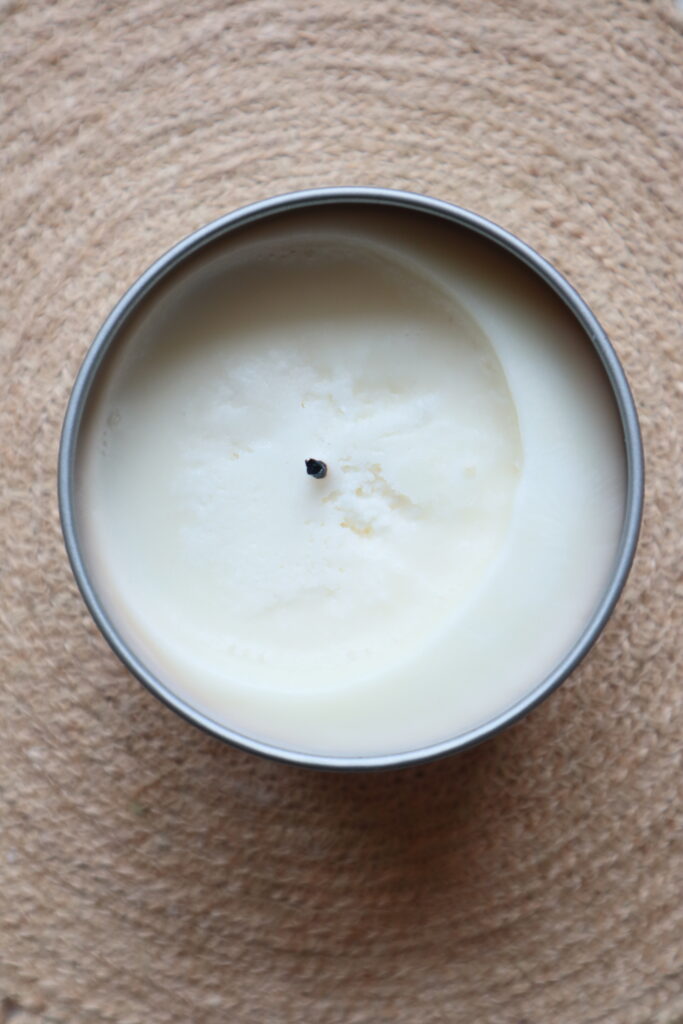
This photo shows a 100% soy candle after the first burn. The rough, uneven textured formed as it cooled. It’s kind of ugly. That doesn’t make the candle unusable, but it’s not the smooth finish that I personally prefer.
This is obviously not a candle making rule, but a personal recommendation from me to you: if you’re set on using soy, go for a blend like para-soy or coco-soy. It’ll save you a lot of frustration while you’re learning!