
There’s nothing more disappointing than spending hours on a batch of candles, only to burn them and discover that they barely smell. There are 4 things I always do to make candles that smell amazing and I’ve organized them into a handy flowchart. Scroll to the bottom if you want to download the printable version!

You used the wrong fragrance load.
More fragrance doesn’t always mean better scent throw, but too little will almost always result in a weak candle. If you’re buying fragrance oil from a reputable seller, there should be a fragrance load recommendation on the bottle (or included in the packaging). It is generally something like 5-10%. That means that in a 9 ounce candle, the minimum amount of fragrance that you should use is about 0.48 ounces (5% of the total ingredient weight) and the maximum is 1 ounce (10%). Don’t like math? Check out my fragrance load calculator here!
If you’re currently using an amount on the lower end of the fragrance load range, try increasing it slightly. Just be sure to:
- Test in small batches first (so that you don’t waste wax!).
- Stay within the manufacturer’s recommended range. If droplets of oil appear on the surface of your candle, you’ve used too much. Past the maximum fragrance load, the wax can’t absorb all of the oil and it just sits on the top. This is a fire hazard!
Sometimes the fix is as simple as increasing the amount of fragrance oil, but if I’ve already added the max and I’m still having problems, the next thing that I pay attention to is temperature.

vine vida
My Favorite Fragrance Oils
I buy most of my fragrance oils from either Vine Vida or Candle Science. Candle Science has more variety, but Vine Vida has a lot of popular fragrances like Love Spell and Volcano. Also, their sampler sets are a great starting point for beginners.
You added fragrance oil at the wrong temperature.
Fragrance oil needs to blend properly with wax to perform well and temperature plays a huge role in that.
I typically add my fragrance oil to the melted wax when it reaches 180 degrees Fahrenheit. A good range to target is 170-185 degrees Fahrenheit. Most candle supply companies will include recommended temperatures on the product packaging or on their website.
If you’re adding oil to wax that is too cool, the fragrance won’t fully blend. It’s like adding sugar to cold iced tea and expecting it to fully dissolve. If you add fragrance oil to wax that is too hot, you risk burning off the oil and/or scorching the wax.
Try adjusting your add temperature up or down by 5 to 10 degrees and test again. This small tweak can improve how well the scent holds. If I’ve already added my fragrance oil within the recommended temperature range and it’s still weak, it’s time to move on to wick size.
Your wick is too small.
When you burned the candle, did the melt pool spread out to the edge of the candle container? If you did not get a full melt pool within a few hours, your wick is probably too small and you should size up.
A larger wick will:
- Generate more heat
- Create a bigger melt pool
- And release fragrance more effectively
Move up just one size and test before making bigger changes. If your candle was severely under-wicked the first time, you might consider making a 2 or 3-wick candle.
If I’ve properly wicked the candle and it still has no smell, there is one more factor that I consider. Time.
You’re burning the candle too soon.
You may be judging the candle before it’s ready. Let the candle cure first. Pour your candle, then leave it alone for a few days so:
- the fragrance spreads out into the wax evenly
- the wax fully hardens
- everything stabilizes
This is both the easiest part of candle making (because all you have to do is nothing) and the hardest (because waiting is not fun). But trust me, it’s worth it. Be patient!
Extend the cure time on your next batch to improve scent throw. Some waxes need more time than others:
Recommended Candle Cure Times
| Wax Type | Recommended Cure Time |
| Paraffin Wax | 3-5 Days |
| Para-Soy Blends | 5-7 Days |
| Coconut Wax Blends | 5-10 Days |
| Apricot Wax Blends | 5-10 Days |
| Soy Wax | 10-14 Days |
| Beeswax | 10-14 Days |
You’re using the wrong ingredients.
If you’ve tried everything above and your candle still smells weak, it’s time to look beyond the process and focus on the raw materials. What wax are you using? Where are you getting your fragrance oils?
Some wax types naturally hold and release fragrance better than others:
- Paraffin is known for its strong scent throw. (Para-soy blends are another great option)
- Coconut blends (coconut–soy or coconut–apricot) are also excellent at throwing fragrance.
- Soy wax is decent at holding fragrance, but not as good as paraffin or coconut blends (especially on its own).
- Beeswax is a beautiful, natural wax, but it comes in last on this list for its ability to hold fragrance.
coconut apricot wax blend
My Favorite Wax for Scented Candles
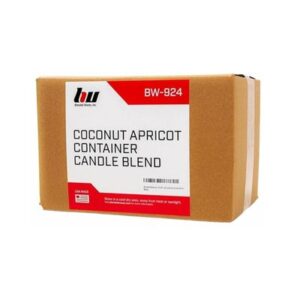
I’m a fan of all coconut blends, but coco-apricot is my personal favorite. Coconut wax used to be difficult to source, but it’s become more widely available in recent years and I highly recommend trying it out if you want candles with a strong scent throw and smooth tops.
If you’re still unsure which wax to start with, check out my Best Candle Wax for Beginners guide.
Fragrance oil quality matters too. I’ve wasted a lot of money on bad oils that were either overly diluted or worse, harsh and chemical-smelling.
You can’t go wrong with a fragrance oil from one of the big candle supply companies (Candle Science, Bramble Berry, Makesy, The Flaming Candle, etc.). If you are searching elsewhere, you should look for fragrance oils that are:
- Designed specifically for candle use
- IFRA-compliant for safety and performance
I would avoid essential oils. Most aren’t really created to perform well in candles.
Free Download
Grab the Printable!
Here’s a guide that will help you diagnose why your candle smells weak and how to fix it. It’s free to download. Hope it helps!

Candle making involves so much trial and error. When something goes wrong, the key is to try again, adjusting one variable at a time before re-testing. That’s why I write down all of the important details like pour temperature and fragrance load.
Even after making hundreds of candles, I still end up with the occasional dud. I’ve learned to just accept it. On that note: I am also working on a troubleshooting guide for fixing ugly candles (with sinkholes, uneven tops, and wet spots). Stay tuned for that one!


